
New Jersey Court Records
New Jersey court records are kept by the Superior Court in each of the state's 21 counties and by municipal courts in cities and towns across New Jersey. These records cover criminal cases, civil lawsuits, family matters, tax disputes, and local violations. The state court system gives the public several ways to look up and get copies of court records. You can search online through free portals, visit a courthouse in person, or send a written request by mail. This guide walks through each option so you can find the New Jersey court records you need.
New Jersey Court Records Quick Facts
Where to Find New Jersey Court Records
Court records in New Jersey come from several sources. The Superior Court handles all major cases in the state. It has three main parts: the Criminal Division, Civil Division, and Family Division. Each of the 21 counties has a courthouse where these records are filed and stored. The Superior Court Clerk's Office in Trenton keeps records for closed cases. Local courthouses hold records for cases that are still open. Municipal courts across New Jersey also keep their own files for traffic tickets, local code violations, and minor criminal matters.
The New Jersey Judiciary runs the state's court system from the Richard J. Hughes Justice Complex in Trenton. You can reach the Superior Court Clerk's Office at 609-421-6100. That phone line is open seven days a week from 7 a.m. to 10 p.m. Staff can help you find out where a record is held and how to get a copy. For open cases, contact the courthouse in the county where the case was filed. For closed cases, the Trenton office is your best bet.
The 15 vicinages group the 21 counties into court districts across New Jersey. Some vicinages serve one county, while others serve two or three. Each vicinage has a trial court administrator who oversees day-to-day court operations in that area. Knowing your vicinage can help you find the right office when you need court records.
New Jersey court records are held by the judiciary and organized by county and vicinage throughout the state.
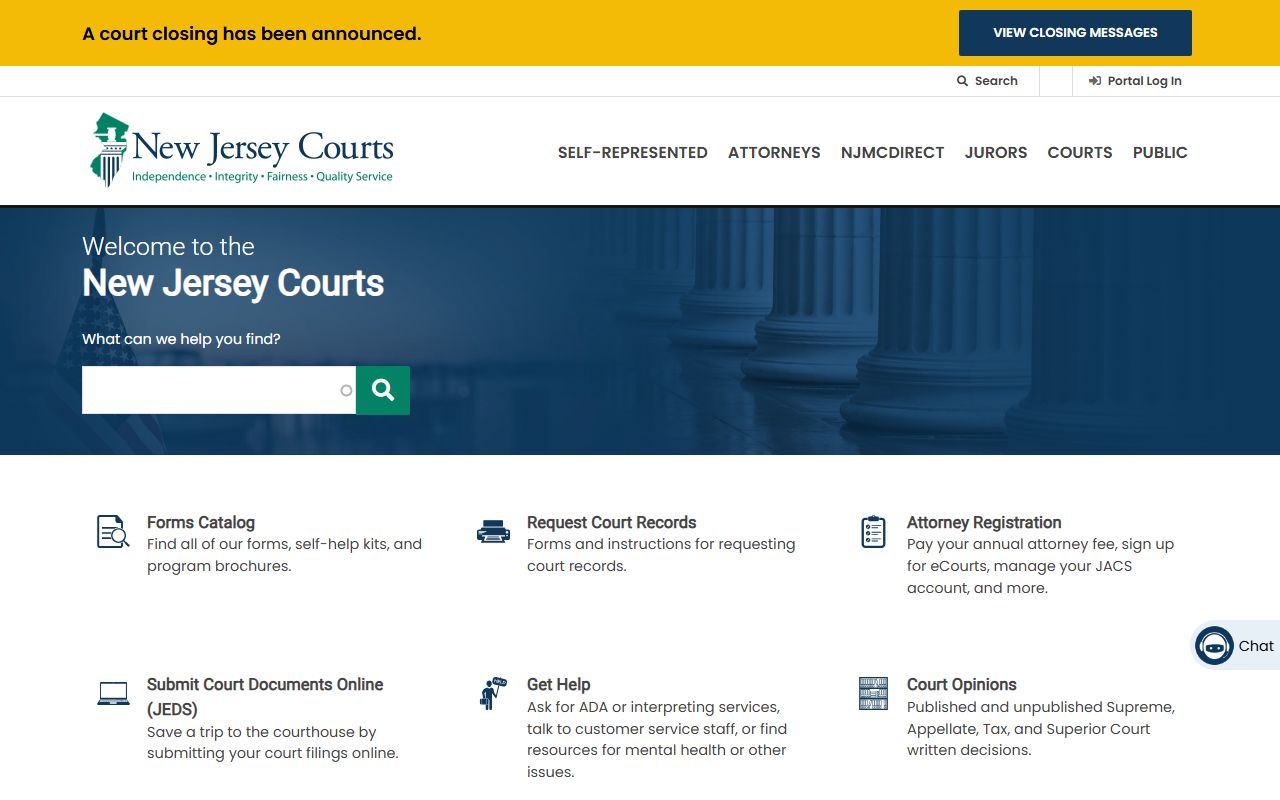
The Judiciary website is the starting point for most court record searches in New Jersey. It links to all the online search tools and has forms you can use to request copies by mail or online.
Search Court Records Online in New Jersey
New Jersey offers free online tools to search court records from home. The Find a Case portal is the main starting point. It links to each search tool based on case type. You can look up criminal, civil, tax, and municipal court records through this single page. Each tool works a bit differently, but most let you search by name or case number.
Visit the Find a Case portal to see all search options for New Jersey court records in one place.
The portal groups every search tool by case type, making it easy to pick the right one for your needs.
For criminal cases, the PROMIS/Gavel Public Access system tracks indictable offenses from arrest through sentencing and appeals. You can search by name, indictment number, or complaint number. This tool shows only cases where the defendant was convicted and sentenced in Superior Court. It does not show juvenile records, expunged cases, or sealed files. Results vary by county based on when each one started using this system.
The PROMIS/Gavel portal is the primary tool for looking up criminal court records in New Jersey.
This system covers all 21 counties, though the date range of records differs for each county in New Jersey.
For civil cases, the Civil Case Public Access portal covers lawsuits, foreclosures, and general equity matters filed in Superior Court. You need to create a free account to use it. Searches work by party name or docket number. The Municipal Court Case Search handles traffic tickets and minor complaints from roughly 510 municipal courts in New Jersey. That tool is free and needs no account.
Note: Criminal judgments from June 30, 2017 onward are also searchable through a separate Criminal Judgments Public Access tool on the Find a Case page.
Types of Court Records in New Jersey
New Jersey courts handle a wide range of case types. Each type creates its own set of records. The Superior Court is split into divisions, and each one deals with different legal matters. Knowing which division handled a case helps you find the right records faster. Here are the main types of court records filed across New Jersey:
- Criminal records from indictable offenses heard in the Criminal Division
- Civil case files for lawsuits, foreclosures, and equity matters
- Family Division records for custody, support, and domestic cases
- Tax Court records for property and business tax disputes
- Municipal court records for traffic tickets and local violations
Criminal court records in New Jersey include complaints, indictments, plea agreements, trial transcripts, sentencing orders, and appeals. These come from the Criminal Division of Superior Court. Civil records cover everything from small claims to large lawsuits. Family Division records deal with child custody, child support, domestic violence restraining orders, and related matters. The Tax Court has 12 judges who hear disputes over property tax assessments and state tax decisions. Municipal courts deal with the highest volume of cases in New Jersey, handling traffic violations, disorderly persons offenses, and local ordinance matters.
New Jersey Court Record Fees
Court Rule 1:38 sets the fees for copies of court records in New Jersey. Plain copies cost $0.05 per letter-size page and $0.07 per legal-size page. A certified copy costs $15 per document. If you need a Seal of the Court, that adds $10. An exemplified copy runs $50, and a triple exemplified copy is $60. These fees apply at any Superior Court location in the state.
Online searches through the free public portals cost nothing. You can look up case information at no charge on Find a Case, PROMIS/Gavel, and the Civil Case Jacket system. The Electronic Access Program is different. It charges $4 per minute of use and gives deeper access to court records for attorneys, title searchers, and other professionals who need it often. That program requires a subscription.
The Electronic Access Program page explains how to sign up for paid access to New Jersey court records.
Subscribers get access to PROMIS/Gavel, the civil case system, and family court records through a single paid portal in New Jersey.
Request Copies of New Jersey Court Records
You can request copies of court records by mail, online, or in person in New Jersey. The process depends on whether the case is open or closed. For open cases, contact the local courthouse in the county where the case is being heard. For closed cases, send your request to the Superior Court Clerk's Office in Trenton at P.O. Box 971, Trenton, NJ 08625-0971.
The Records Request Form is available on the Superior Court Clerk's website. You can fill it out and submit it online or print it and mail it in. When you submit online, records are sent to the email address you provide. Fees for certified and exemplified copies can be paid by credit card. Be sure to use "SCCO" as the processing location code when sending your request to the Trenton office.
The records request page shows how to fill out the form and where to send it for New Jersey court records.
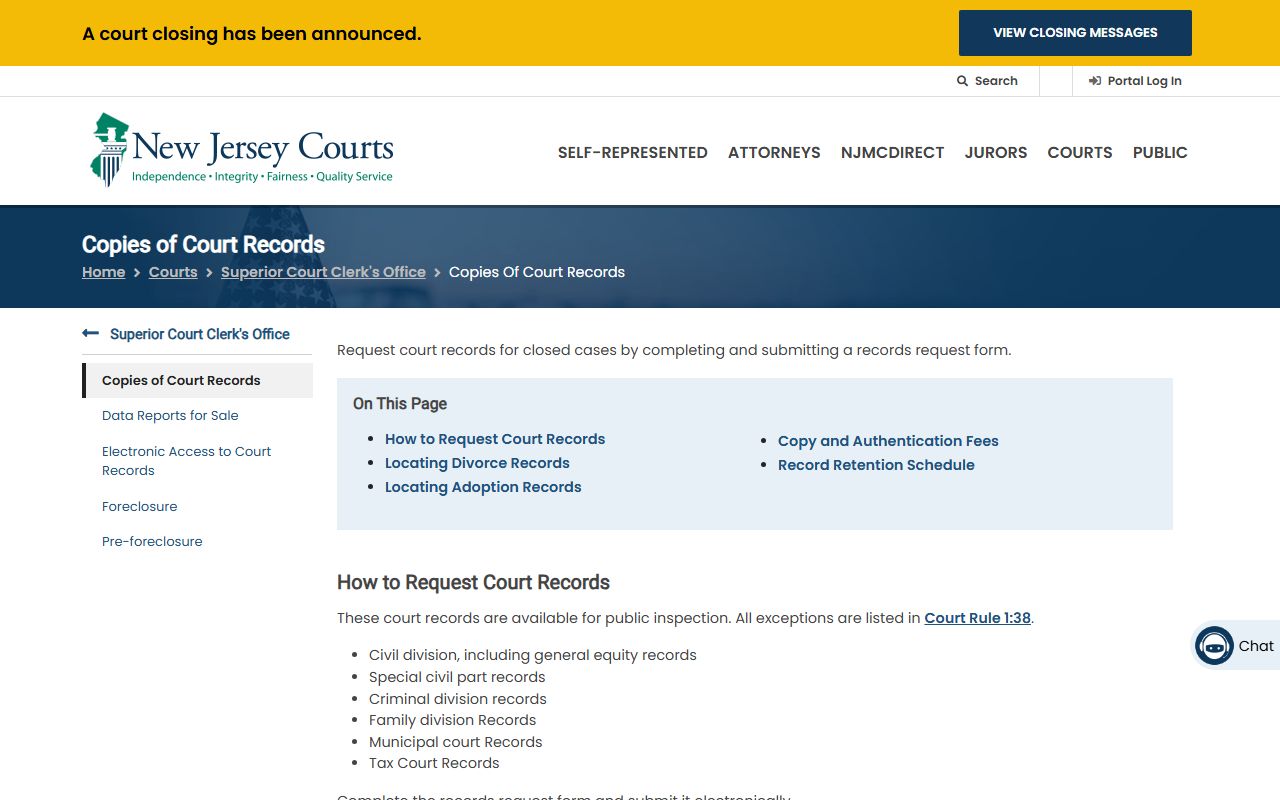
This form works for criminal, civil, and family court records held by the Superior Court Clerk's Office in New Jersey.
The Judiciary Electronic Document Submission system, known as JEDS, is another way to send your request. JEDS lets you upload the completed Records Request Form online. You get email updates on the status of your request. The system runs around the clock, though staff process requests during normal business hours.
JEDS gives you a way to submit court document requests from anywhere in New Jersey without a trip to the courthouse.
After you submit through JEDS, you can check back to see the status of your records request at any time.
Note: In-person requests at local courthouses are often handled the same day, while mail and online requests may take longer to process.
Public Access to New Jersey Court Records
Court records in New Jersey are generally open to the public. Court Rule 1:38 governs access to records held by the judiciary. The rule starts with a clear premise: all court records are available for public inspection and copying unless a specific exception applies. There are 38 exceptions listed in the rule. These include juvenile records, adoption files, grand jury materials, domestic violence records, and cases sealed by a judge.
The Court Rules page on the Judiciary site contains the full text of Rule 1:38 and all other rules that govern New Jersey court records.
Rule 1:38 was updated in 2009 to shift its focus from confidentiality toward a presumption of openness for court records in New Jersey.
It is worth knowing that the Government Records Council oversees OPRA, or the Open Public Records Act, under N.J.S.A. 47:1A-1 et seq. However, OPRA does not apply to court records in New Jersey. The GRC has no power over the judicial branch. Court records fall under Rule 1:38, not OPRA. This is an important distinction. If a court denies your request for records, your appeal goes to the Appellate Division of Superior Court, not to the GRC.
The Government Records Council site explains OPRA and how it works for other government records in New Jersey.
While OPRA covers most state and local records, court records in New Jersey are governed separately under Rule 1:38.
The full text of the OPRA statute is posted on the GRC website for public review.
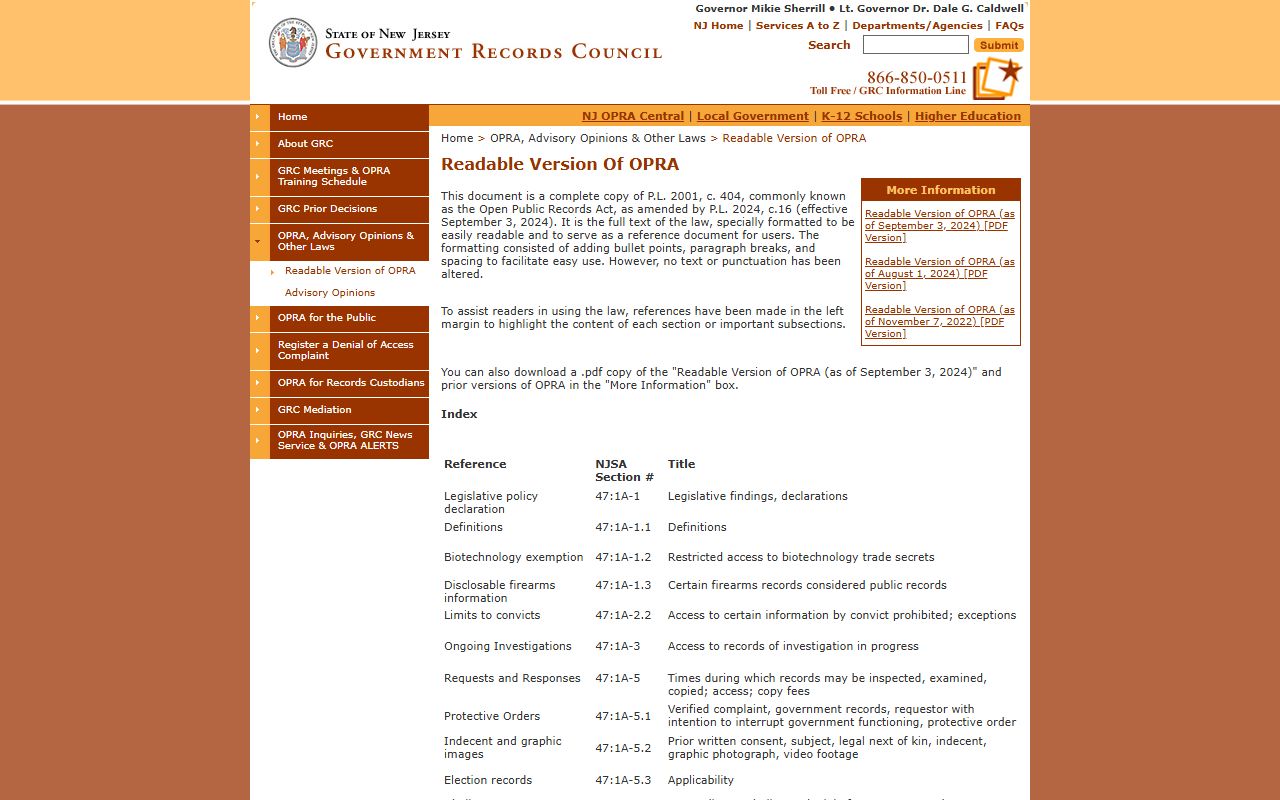
Reading the statute helps you understand which records fall under OPRA and which are handled through the courts in New Jersey.
Expungement of Court Records in New Jersey
Under N.J.S.A. 2C:52-1, New Jersey allows people to seal certain court records through expungement. Expungement means the extraction, sealing, and isolation of all records tied to an arrest, trial, or conviction. Once a record is expunged, it is removed from public view. Courts, law enforcement, and other agencies must treat the case as if it never happened.
Waiting periods depend on the type of offense. Indictable crimes require a 10-year wait from the date of conviction, payment of fines, or release from jail. Disorderly persons offenses have a 5-year wait. New Jersey also passed a Clean Slate law in 2021 that allows automatic expungement after 10 years from the most recent conviction in some cases. Certain serious crimes cannot be expunged, including homicide, kidnapping, sexual assault, robbery, and arson. You file for expungement in the Superior Court in the county where the conviction took place.
The New Jersey State Police Expungement Portal lets people who have filed check the status of their request. The portal shows where your case stands in the process. Once an expungement is granted, the State Police recommend running a personal background check to make sure all records have been cleared. Contact the NJSP Expungement Unit at ExpungementUnit@NJSP.Gov if you find any issues.
Note: Expunged court records in New Jersey are removed from all public search tools and are no longer available through PROMIS/Gavel or the Civil Case Jacket system.
New Jersey Court Vicinages Directory
New Jersey groups its 21 counties into 15 vicinages for court operations. Each vicinage has its own assignment judge and trial court administrator. Some vicinages cover a single county, like Essex or Bergen. Others combine two or three smaller counties under one court district. The vicinage system helps the judiciary spread its resources across the state.
Use the vicinages directory on the Judiciary site to find contact details for each court district in New Jersey.
The directory lists every vicinage along with phone numbers, addresses, and links to local court information across New Jersey.
Browse New Jersey Court Records by County
Each county in New Jersey has its own Superior Court that stores court records. Pick a county below to find local contact info and resources for court records in that area.
Court Records in Major New Jersey Cities
Residents of major cities file cases at their county Superior Court or local municipal court. Pick a city below to learn about court records in that area.